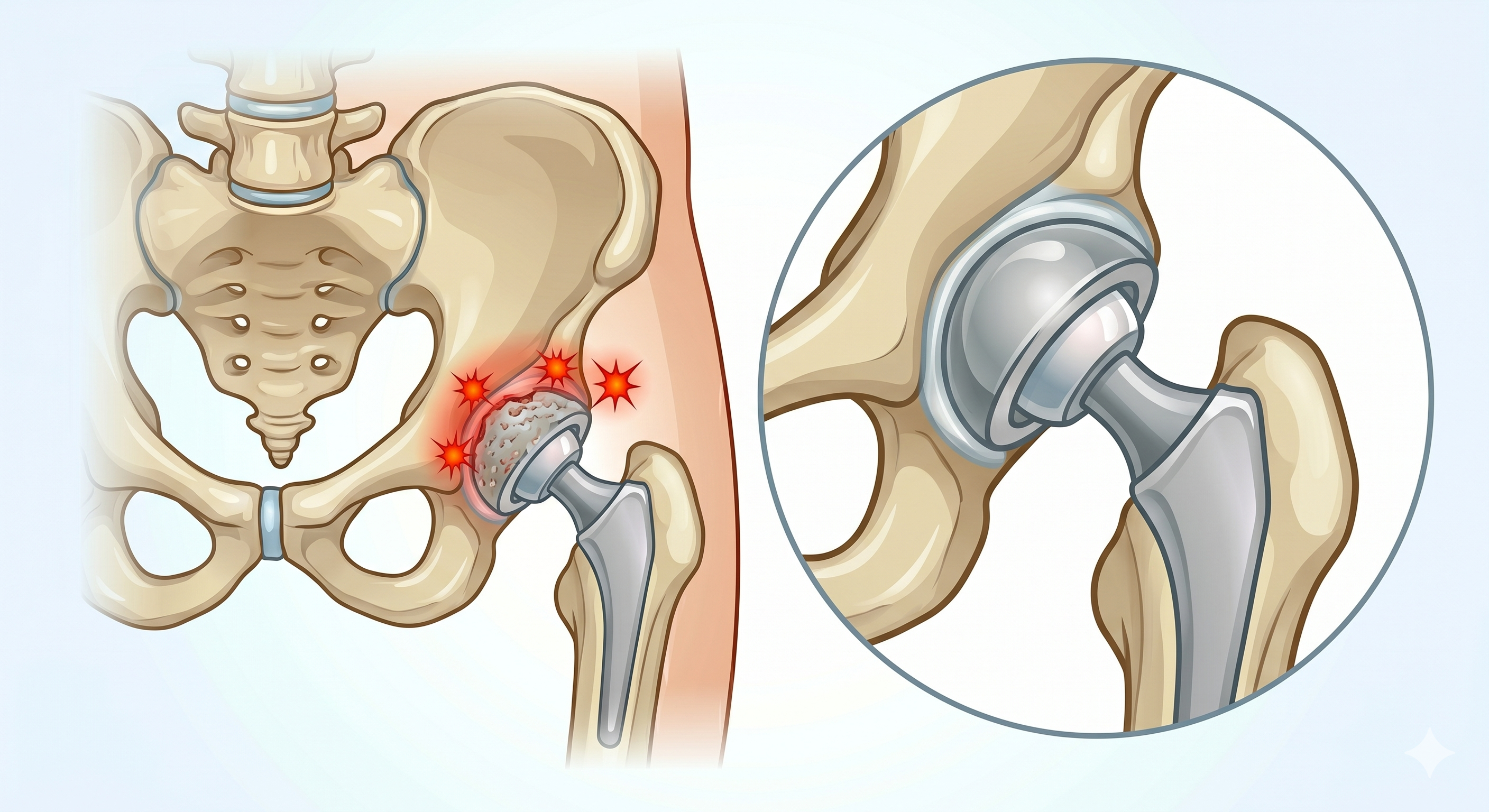
Having surgery is scary. We never know exactly what the outcome is going to be, and the uncertainty alone can feel overwhelming. But sometimes there is no alternative — and when that's the case, what you do before and after your surgery matters enormously.
"By the time I had my surgery I just needed to be out of pain. Months after my operation I was experiencing significant groin pain and not getting any answers. When you give the body what it needs, it responds — almost like a sponge. I had a hip replacement in 2017, and I cannot imagine my life if I hadn't had it."
Before surgery
Why Preparation Matters
If you know you're heading toward hip replacement surgery, working on your strength beforehand makes a real difference to your outcome. If your hip has been painful for a long time, your body will have been compensating for years before the pain even became severe. Pre-hab isn't just about building strength in the hip — it's about understanding those compensations and giving the whole system the best possible starting point for recovery. The stronger and better-moving you are going in, the better the environment your body has to recover into.
After Surgery — Why Rehabilitation Needs to Go Further
Many people feel significantly better once the initial recovery is complete and assume the job is done. But the body doesn't automatically return to its original movement patterns just because the joint has been replaced, and the compensations that built up over years are still there. Months or even years down the line, some people start to notice new discomfort in the groin, the knee, or the lower back for exactly this reason. Whole-body rehabilitation addresses not just the replaced joint but the movement patterns the body has been missing — so the new joint can work the way it was designed to.
The approach
How I Work With It
01
Restore movement
Using Gary Ward's AIM method — Anatomy in Motion — we find what's missing in the movement system and put it back. For hip replacement rehabilitation that means restoring movement through the hip and pelvis so the new joint can function the way it was designed to.
02
Build strength in the right places
It's not just about the hip itself. We build strength across the whole chain — from the foot and knee up through the hip — so the system works together and doesn't create new compensations elsewhere in the body.
03
Address the whole system
The loading patterns that drove the problem before surgery are often still there after it. We look at the whole chain and make sure the new joint has the movement and support around it to hold up for the long term.
What to expect
What a Session Looks Like
Sessions are practical and hands-on. We'll look at how you move, how you load, and where the restrictions remain. You'll leave with a clear understanding of what your body still needs — and a specific exercise programme, fully videoed, that takes around 20 minutes a day to complete at home. No gym required.
"Whether you're preparing for surgery or recovering from it, giving the body what it's been missing is what makes the difference."
Anyone preparing for a hip replacement and wanting the best possible starting point
People in recovery who want rehabilitation to go beyond the standard
Those who had surgery some time ago but feel movement still isn't quite right
People noticing new discomfort in the groin, knee, or back since their operation
Anyone whose post-operative rehab has finished but something still doesn't feel resolved
If you've had both hips replaced, the same approach applies — we look at how the whole system is loading and moving, and what needs to be restored.
Common questions
Frequently Asked Questions
Possibly. The body doesn't automatically return to its original movement patterns just because the joint has been replaced, and if something doesn't feel quite right or you're noticing new discomfort elsewhere, it's worth having a whole-body movement assessment to find out what the system still needs.
Pre-hab is the work you do before surgery to give your body the best possible starting point for recovery. The stronger and better-moving you are going in, the better the environment your body has to recover into. I offer pre-hab sessions specifically for this — and speak from personal experience, having had a hip replacement myself in 2017.
This is not uncommon. Standard post-operative rehabilitation does its job well but doesn't always address the whole-body movement patterns that were driving the problem before surgery. A whole-body movement assessment can identify what the system is still missing and build a programme to address it.
Yes. The approach is the same regardless of whether one or both hips have been replaced — we look at how the whole system is loading and moving and what needs to be restored.
Standard physiotherapy is excellent at managing the immediate post-operative recovery. What I do is complementary to that and comes into its own once the initial recovery is complete — looking at the whole movement system, finding what's still missing, and building a programme to address it. And having had a hip replacement myself, I understand that journey from personal experience.
Ready to start?
Find out what your body needs to recover well.
Based in Brighton · Working with clients across the surrounding area