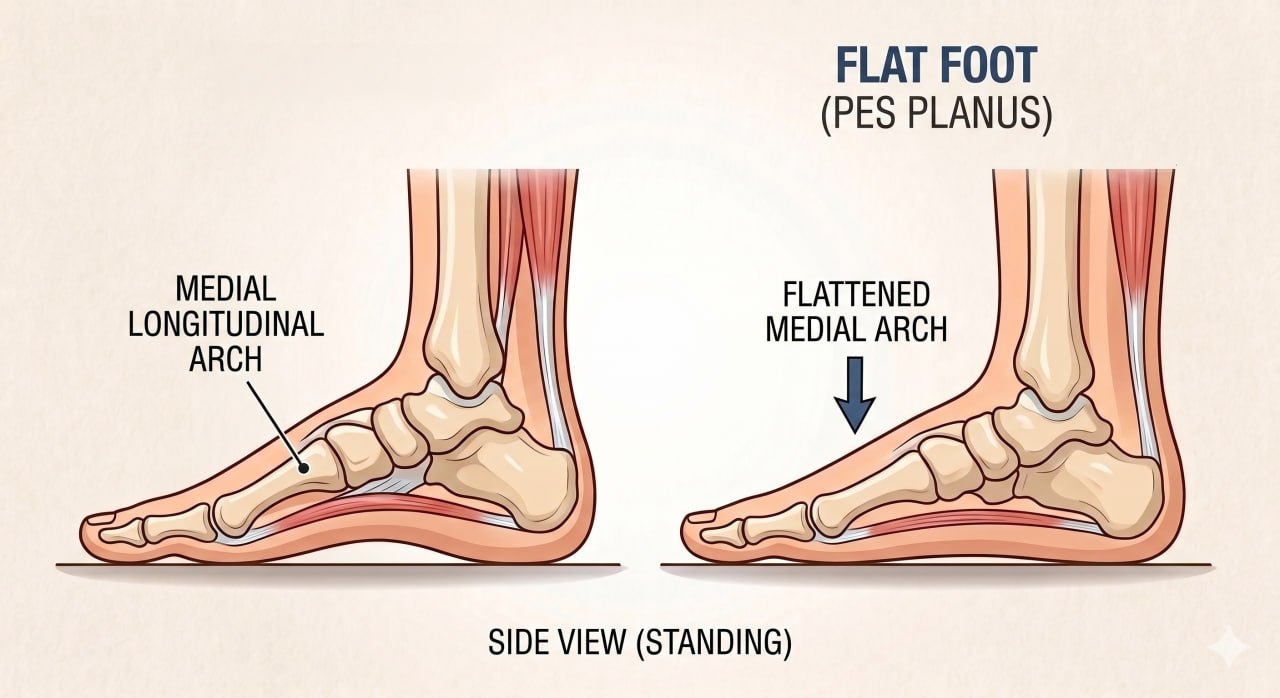
Flat feet are something many people have been told they simply have to manage — orthotics for life, supportive shoes, told they overpronate. But flat feet don't always cause pain in the foot itself, and there's often a great deal that can be done.
Told you overpronate and there's nothing to be done
Understanding the problem
What's Actually Going On
Overpronation isn't really a meaningful diagnosis. The foot has two movements available to it — pronation, where the arch lowers to absorb load, and supination, where the arch lifts to propel you forward. Every healthy foot does both. The problem with flat feet isn't too much pronation — it's that the foot often isn't moving at all. It's stuck, and has lost access to pronation and supination entirely.
Think of the foot like a spring that's lost its recoil. The work is about restoring that movement so the foot can function the way it was designed to. When the foot is stuck flat, load travels down through the inside of the leg with every step, and the pain often shows up in the knees, hips, or lower back rather than the feet themselves.
"I worked with a client who spent most of his day on his feet running a restaurant. He had very flat feet and significant pain in his knees and back. When I asked him to stand differently as part of the assessment process, his back pain eased almost immediately."
The approach
How I Work With It
01
Checking whether the foot can create an arch
Using Gary Ward's AIM method — Anatomy in Motion — we check whether the foot can create an arch when asked to, and what's preventing it from doing so. The goal is to restore the full movement — pronation and supination — so the foot can function as it was designed to.
02
Building strength through the inside of the foot and hip
Orthotics can offer short-term relief, but the goal is to build a foot that can support itself. Targeted exercise is often the most important part of the solution, and the programmes I give are built specifically around what your foot and body are missing.
03
Footwear guidance
A wide toe box and a supportive sole make a real difference while the strength work takes hold. As part of your programme you'll receive specific guidance on what to look for — because footwear can make or break the results of everything else.
What to expect
What a Session Looks Like
Sessions are hands-on and practical. You'll leave with a specific exercise programme, fully videoed, that takes around 20 minutes a day at home. No gym required.
"The goal is to build a foot that can support itself — so that over time the need for orthotics reduces rather than increases."
If you've tried everything and it keeps coming back, you're in the right place
People who are on their feet all day and need a foot that can keep up
Those who are dependent on orthotics and want to build their own support
Anyone who simply wants to understand what their flat feet are doing to the rest of their body
Flat feet don't always cause pain in the foot itself — the symptoms often show up in the knees, hips, or lower back because of the way load travels through a flat foot with every step.
Common questions
Frequently Asked Questions
Overpronation isn't really a diagnosis that tells you much. The foot either pronates or supinates — every healthy foot does both. The problem with flat feet is that the foot has often lost access to supination entirely and is stuck in one position. The work is about restoring the full movement so the foot can function the way it was designed to.
Orthotics can offer useful short-term relief but they don't address the underlying movement and strength patterns. The goal of the work I do is to build a foot that can support itself, so that over time the need for orthotics reduces rather than increases.
Flat feet don't always cause pain in the foot itself — the symptoms often show up in the knees, hips, or lower back because of the way load travels through a flat foot with every step. If you're experiencing any of these, it's worth exploring whether the foot is part of the picture.
Yes — in many cases targeted exercise is the most important part of the solution. The programmes I give are built specifically around what your foot and body are missing, and they're fully videoed so you always know exactly what to do at home.
Significantly. A wide toe box and a supportive sole make a real difference while the strength work takes hold, and as part of your programme you'll receive specific guidance on what to look for.
Ready to start?
Find out what your feet have been trying to tell you.
Based in Brighton · Working with clients across the surrounding area