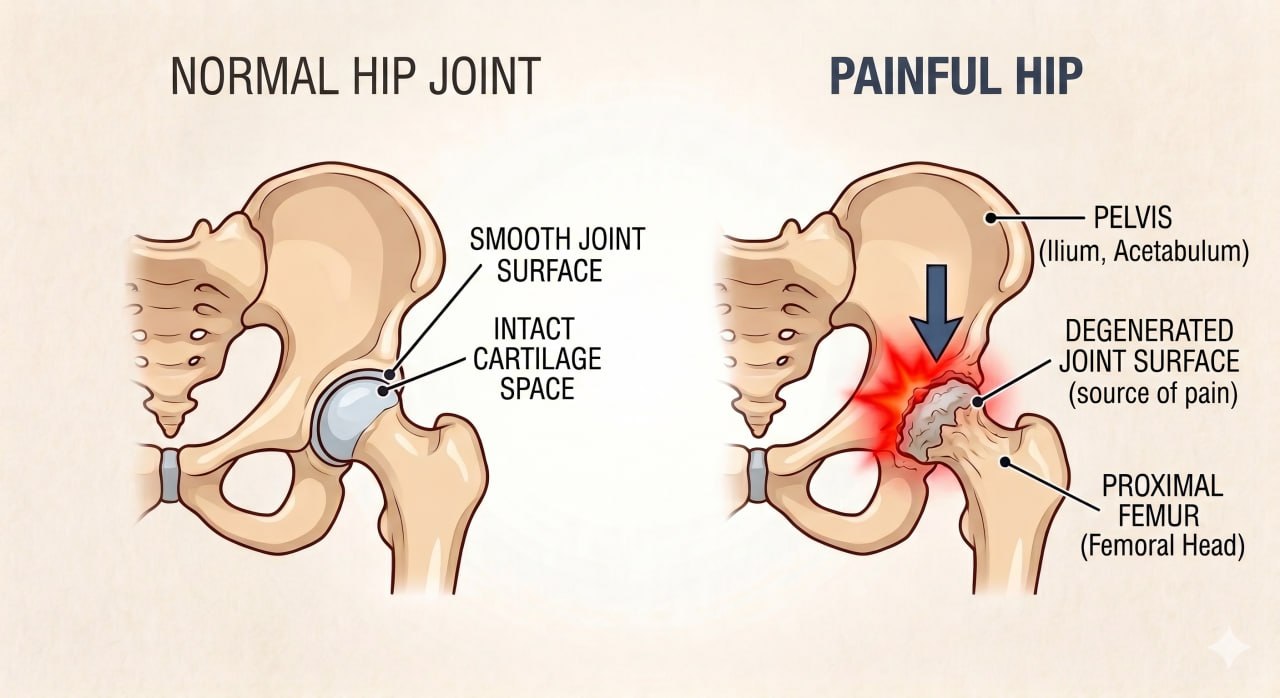
Hip pain is something many people simply learn to live with — an ache when walking, stiffness getting out of a chair, discomfort that's just always there. After a while it starts to feel normal. But it isn't normal, and in most cases it doesn't have to stay that way.
Difficulty lifting your leg when getting out of a car
Understanding the problem
What's Actually Going On
One of the most common patterns I see is the hip losing its ability to move fully — through both extension and flexion. When that happens, the body finds another way. The pelvis tips forward, the lower back works harder than it should, and the body recruits further up the chain — you might notice your shoulders getting involved, your weight shifting to one side, one foot turning out more than the other, or difficulty lifting your leg when getting out of a car.
These aren't random changes — they're strategies, the body working around a hip that has run out of options. Pain is just a flag telling you something needs attention somewhere in the system. The hip also connects directly to how the foot meets the ground, and when it's struggling that shows up further down the chain in the knee, the ankle, and the foot too.
What About Arthritis?
If you've been told you have early arthritis, keeping the muscles around the joint strong and maintaining good movement makes a real difference to how it feels and functions — and that's exactly what this work focuses on.
The approach
How I Work With It
01
Restoring movement through the hip and pelvis
Using Gary Ward's AIM method — Anatomy in Motion — we find what's missing in the movement system and put it back. For hip pain that means restoring movement through the hip and pelvis, looking at where the body is compensating, and giving the system back what it needs to function freely.
02
Building strength in the right places
Strength is important — but only in the right places and at the right stage. We build strength to support the movement we've restored, not to mask the movement that's missing. This is what makes results hold over the long term.
03
Looking at the whole chain
The hip sits in the middle of the chain — connecting the lower back above to the knee and foot below. The goal is always the same — find what the system is missing, put it back, and build the strength to keep it there.
What to expect
What a Session Looks Like
Sessions are hands-on and practical. You'll leave with a specific exercise programme, fully videoed, that takes around 20 minutes a day at home. No gym required.
"Many people live with hip pain for years before seeking help, simply believing it's part of who they are. It isn't. When you give the body what it's been missing, it responds — often more quickly than people expect."
If you've tried everything and it keeps coming back, you're in the right place
People who want to get back to exercise, move more freely, or simply walk the dog without their hip holding them back
Those who've been told they have early arthritis and want to keep the joint functioning well
Anyone who notices their weight shifting to one side, or one foot turning out more than the other
Consistency with the daily exercises is what makes the changes hold. Most clients notice a change within the first few sessions.
Common questions
Frequently Asked Questions
Yes — and this is something I hear regularly. Many people live with hip pain for years before seeking help, simply believing it's part of who they are. It isn't. When you give the body what it's been missing — better movement, the right strength work, and an understanding of what's been driving the pain — it responds.
Almost certainly. If the hip isn't moving as it should, the pelvis tips forward, the back works harder, and the body recruits other areas to help. You may have noticed your weight shifting to one side, one foot turning out more than the other, or difficulty getting out of a car — these are all strategies the body uses when the hip has run out of options.
Not as much as you might think. Keeping the muscles around the hip strong and maintaining good movement makes a significant difference even with arthritis present. The AIM approach works just as well when arthritis is part of the picture.
Because the hip sits in the middle of the chain — connecting the lower back above to the knee and foot below. When the hip isn't moving well, both ends of that chain feel it. Treating the back or knee in isolation, without addressing what's happening at the hip, is why so many people find their pain returns.
The body responds well when it gets the right input — often faster than people expect. Most clients notice a change within the first few sessions, and consistency with the daily exercises is what makes the changes hold.
Ready to start?
Find out what your body has been trying to tell you.
Based in Brighton · Working with clients across the surrounding area